Are you marketing to future customers or only to those who are already buying?
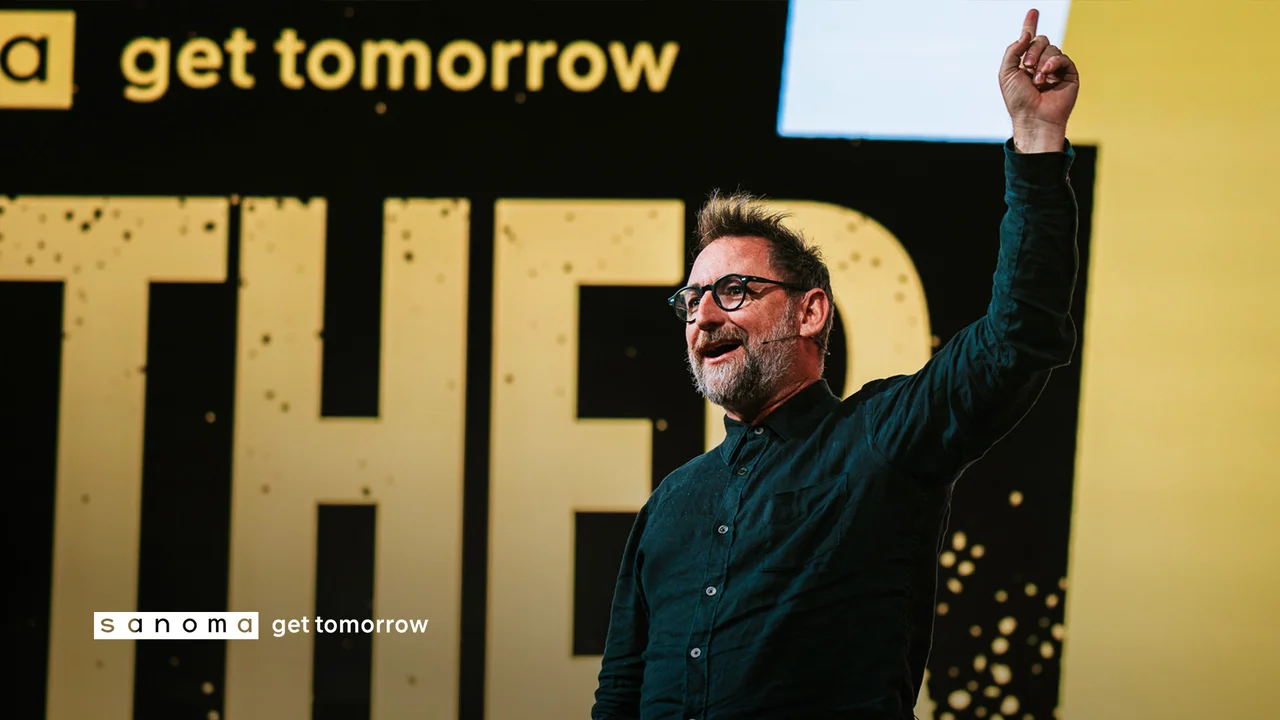
James Hurman started his speech by noting that 75% of marketers feel that their investments in tactical performance marketing are producing increasingly poor results. In terms of metrics, it looks successful, but there is no real business impact. According to Hurman, we have optimised our marketing efforts to be effective at the expense of business performance.
He pointed out that most of the advertising target audience is not buying at that very moment. When the attention and euros invested in marketing focus only on current demand, future growth is left unrealised.
Hurman divides the market into two groups. The first is small but visible: people who are actively buying. They generally amount to only 5–25%, depending on the category. The second group is much larger, up to 75–95%, and consists of people whose interest may be prompted later.
When marketers’ attention focuses only on the audiences already in the market, they are competing for a small group at an increasing price, while giving competitors a head start for the future.
Current and future demand require different things
Hurman challenged the traditional marketing thinking. Even with the best possible ad, you cannot get everyone to buy. Advertising, mean while, determines how demand is distributed among brands.
At the time of purchase, people look for facts, features and reasons. Future potential customers are not looking for anything yet. The task of marketing is therefore to build brand awareness and a positive attitude in advance.
Selections are often made based on familiarity and images, not as a result of rational comparison. People naturally choose a brand that feels familiar and safe, even when there is an objectively better option available. This is what Hurman calls a brand’s invisible yet decisive competitive advantage.
Brand recognition brings conversions
Hurman presented research from Tracksuit and TikTok showing that clicks have almost no connection with brand awareness or sales. Clicks can be obtained for a variety of reasons.
Yet there is a significant difference in conversions. Well-known brands can convert many times better than less well-known ones, regardless of how well their performance marketing is technically optimised.
Conversion is not only the result of performance marketing but of well-executed brand work. When awareness is built in advance, short-term marketing also works more effectively.
He illustrated the importance of balance with two contrasting examples. Airbnb shifted its focus from performance marketing to building a brand and achieved the best results in its history. Nike, on the other hand, moved in the opposite direction and lost market share, profitability and company value.
Creative execution builds demand that does not yet exist
How then can you win the attention of future customers? Hurman’s answer is clear: with creativity, emotion and wide visibility.
He reminded the audience that content-driven creative ads are many times more effective at increasing market share than mediocre ones. Creativity is not a decoration but a way to earn attention from people who have no reason to be interested in you right now.
Rational communication works best when there is already a need to buy. Emotion plays a crucial role in building future demand. An emotion stays in the mind and influences decisions long after the details and facts have been forgotten. It is through these memory traces that brands build pricing power, loyalty and long-term profitability.
Wide reach is not outdated - it is essential
Hurman challenged the idea that future growth could be built solely on precise targeting. Algorithms are great for capitalising on current demand, but they cannot reach people who are not buying yet.
Building future demand therefore also requires media that have wide reach and create shared cultural experiences.
At the end of his speech, Hurman returned to the eternal question of the marketing budget. Extensive research evidence shows that when more than half the marketing budget is directed at short-term activation, overall effectiveness begins to decline. Brand and performance marketing do not compete with each other. They serve different time horizons. Investing in a brand does not reduce performance but enables it in the long run.
Hurman’s message was both a warning and an encouragement: if you market like a small brand, your brand will become small. Long-term growth also requires courage to invest in the target group that is not yet ready to buy.
Marketing does its most important work in advance
Hurman concluded his speech with a story of a man in his forties who bought an Aston Martin because of an ad he saw as a teenager. This reminds us that the greatest impact of marketing is not always visible immediately, but only later, when the choice is made almost subconsciously.
If we want to grow our business tomorrow, we need to build demand today – creatively, boldly and by understanding people.
James Hurman is the founder of New Zealand-based Previously Unavailable.
Photo by Petri Mast
Read also these Get Tomorrow Together articles:
Malcolm Devoy: Clicks are forgotten, feelings remain – growth comes from memory traces