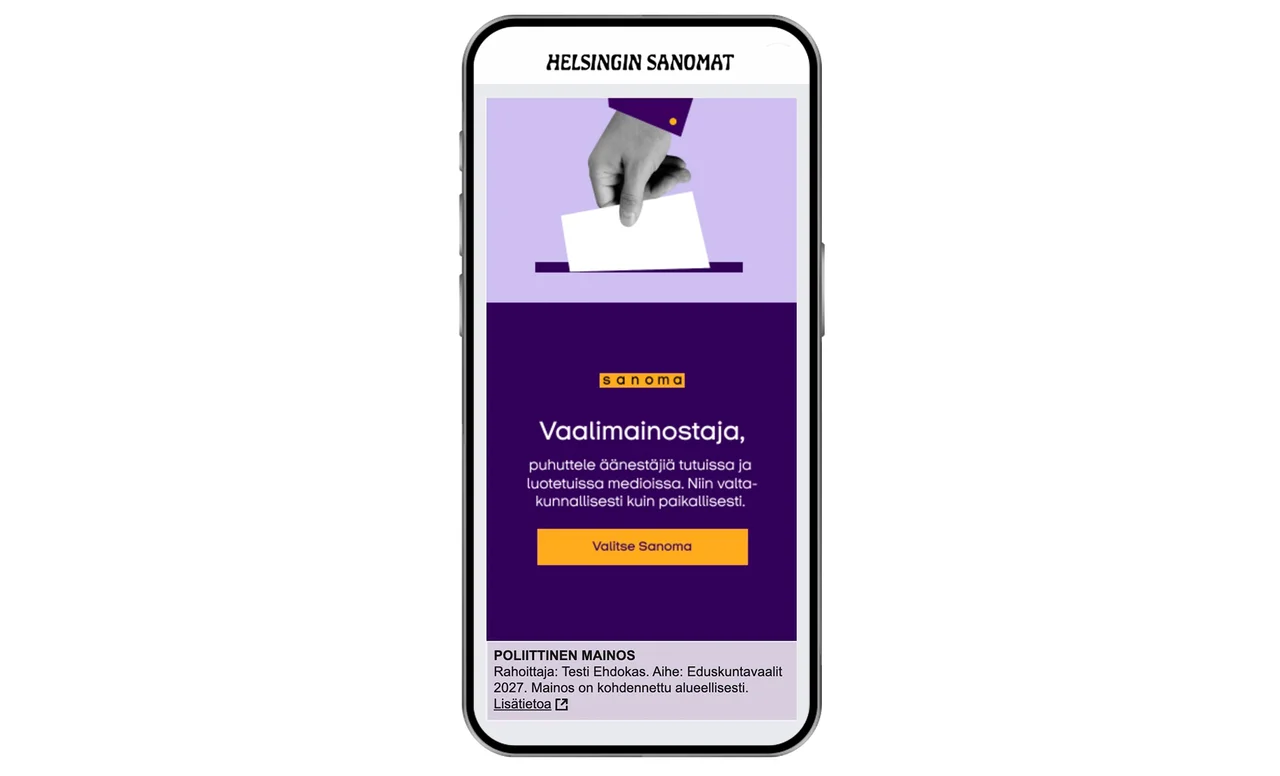
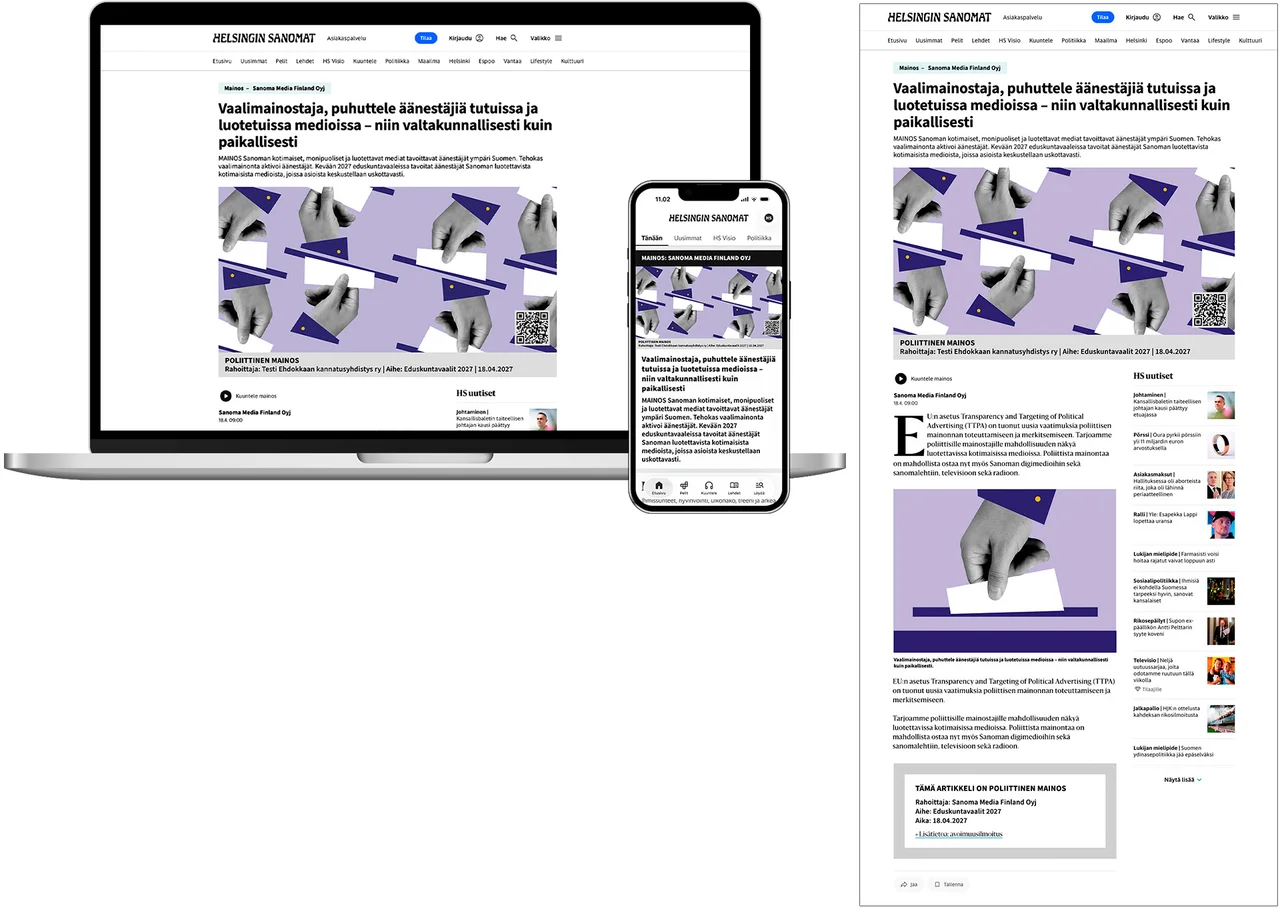
What is political advertising?
Advertising is considered political when its purpose is to influence:
- voting or voting behaviour
- the outcome of an election or referendum
- a legislative or regulatory process at national, regional, or EU level
Advertising is also considered political when it is funded by a political actor, such as:
- a political party
- a politician or election candidate
- a campaign organization or support group acting on behalf of a political actor
Political advertising can also be conducted by companies and organisations
Political advertising is not limited to political parties or candidates. Advertising may also be considered political when it is created or funded by a company, trade association, NGO, industry organisation, or other entity if its purpose is to influence political decision-making, legislation, or regulation.
Typical examples of political advertising include:
Campaigns by companies, organisations, or industry associations aimed at promoting, opposing, or changing specific laws, regulations, or public policy.
Advertising campaigns by NGOs seeking to initiate, prevent, or amend legislation or regulatory decisions.
Advertising that is clearly linked to an ongoing legislative or regulatory process and seeks to influence public opinion or decision-makers as part of that process.
Paid campaigns containing calls to action related to a political process, such as urging action by policy-makers or taking a position on regulatory initiatives.
In these situations, advertising may be considered political regardless of whether the advertiser is a political actor, provided that the message is intended and likely to influence political decision-making.
What is not considered political advertising?
Not all advertising that addresses societal or topical issues is considered political advertising. The following are generally not regarded as political advertising:
- Purely commercial advertising, even if it relates to topics that are part of a broader public debate, provided that its purpose is not to influence legislation or a political process.
(For example, advertising renewable energy solutions without reference to regulation or legislative change.) - General information campaigns intended to provide information without seeking to influence political decision-making.
(For example, campaigns relating to safety, public health, or fraud prevention.) - Charity and fundraising campaigns that do not seek to influence elections, voting behaviour, or legislation.
- Neutral public authority communications, such as notices providing information about advance voting locations or administrative procedures.
How should political advertising be assessed?
The assessment should be based on the following factors in particular:
- the objective of the advertising.
- whether the message relates to an ongoing or proposed political, legislative, or regulatory process.
- the content, tone, timing, and targeting of the message.
If the purpose of the advertising is to influence political decision-making, regulation, or legislation, the advertising may fall within the scope of political advertising rules, even when the advertiser is a company or organisation.
If you are unsure whether an advertisement should be classified as political advertising, please contact Sanoma at the planning stage. We will help assess the situation and ensure that the campaign can be executed in compliance with applicable requirements.