How did Sortter clear its path from a newcomer to a market leader?
Summary
Sortter’s growth from a newcomer to a market leader is based on systematic brand building and long-term marketing.
Multi-channel marketing in domestic media has increased awareness and reached the right target groups.
Data-driven marketing and business metrics guide investments and decision-making.
Reliable media environments strengthen brand image and build customer trust in a competitive industry.
The best results are achieved when brand advertising and tactical measures are combined to build demand both now and in the future.
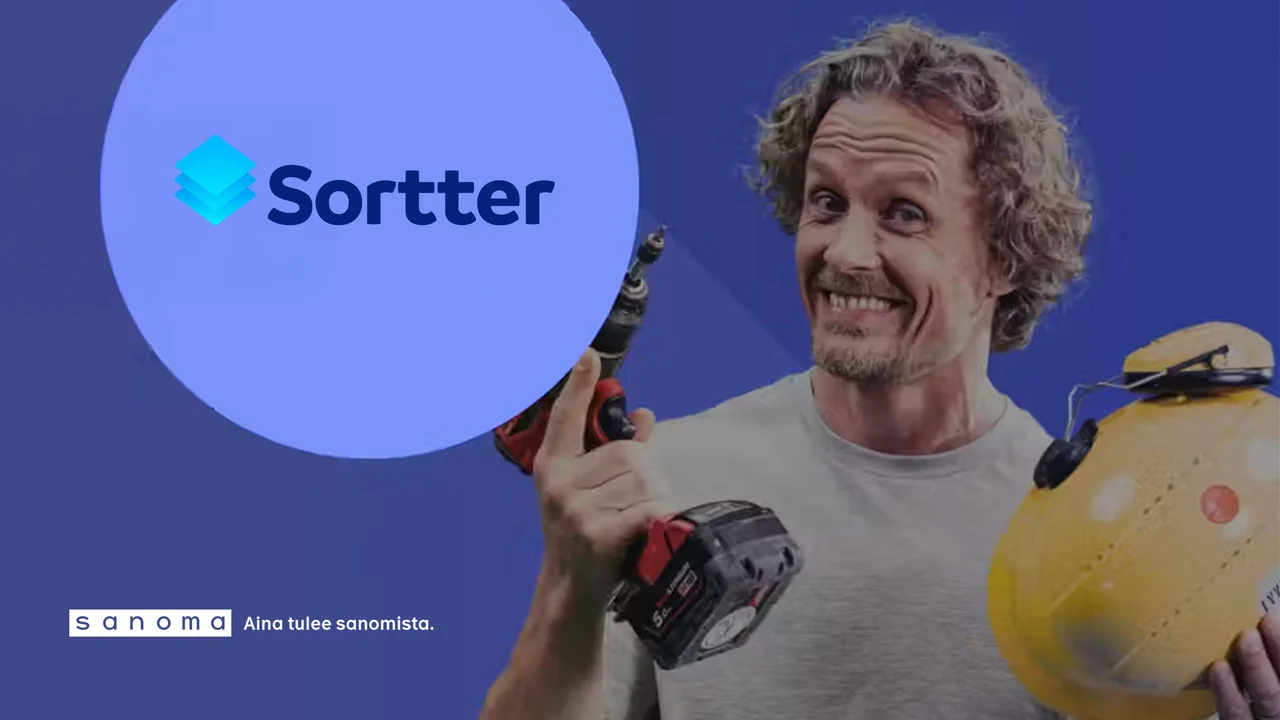
Sortter is one of Europe's fastest growing companies. In 2024, Sortter began measuring marketing using business metrics and focused on domestic media. The collaboration with Sanoma has played a crucial role in building the brand and increasing its visibility.
“We started a creative and experimental collaboration with Sanoma. Low-threshold pilots are key factors in our growth,” says Sortter’s Reetta Sinelampi.
Sortter's marketing is extensive and multichannel. The development of the approval rate for loan applicants on the Sortter platform has shown that Sortter has reached the right target group through Sanoma's channels.
“As a loan comparison service, we operate in trust-based business. The chosen medium affects the customer profile that can be reached through that medium,” notes Sinelampi.
There is a clear connection between brand image and the commercial success of a company. Systematic brand building requires the use of multiple media categories and touchpoints so that advertising can leave a lasting impression and influence perceptions.
In a competitive industry, multichannel presence and reliable media are key to success. Sortter's message has been conveyed clearly and credibly, which has strengthened the brand's position in the minds of consumers and businesses.
Marketing builds a memory trace for future demand
”Brand building is done with future sales in mind, because as consumers, we form our opinions about brands even before making an actual purchase. Before making a purchase decision, people only choose between a few brands they know. Without a strong brand, it is difficult even to be included in consideration,” stresses Minna Kruhse.
Although media usage measurements show that the use of high-attention media, such as television, news media and radio, is particularly high, advertising investments have shifted towards low-attention media, such as social media and media that operate solely on the internet, over the past 10 years.
“It’s important to remember that only about 5% of customers are ready to buy right now. That is why the task of marketing is to build a memory trace for future demand, not just to react to today's sales," notes Kruhse.
Brand advertising creates awareness and images, while tactical advertising triggers purchases. The best results are achieved when they are planned together. Without continuous brand advertising, baseline sales begin to decline and the brand easily finds itself in a situation - or even in a vicious circle - where all investment is directed towards short-term campaigns. Even a market leader should make sure that the brand stays in people’s minds even when they are not ready to make a purchase. Growth does not come from loyal customers, but from the brand being a part of as many people's daily lives as possible.
Choice of media is not neutral
“In order for advertising to influence the company image, it must first be noticed. At least 2.5 seconds are required for the formation of a memory trace. News media content is consumed at a slower pace and with greater focus than other websites. The scrolling pace is 31% slower than on social media channels,” explains Kruhse.
The right context strengthens the message. Media choices are not neutral. It directly affects how strong and credible the message is perceived to be. It is not enough that the advertising is noticed; the media environment and context also have a direct impact on the effectiveness of the message. When an advertisement is presented in a trusted, relevant context and media, its impact and memorability increase.

Reetta Sinelampi,
Director of Business and Development,
Sortter

Minna Kruhse,
Team Lead, Digital Sales,
Sanoma B2B